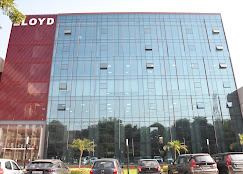
Lloyd Institute of Engineering and Technology Courses & Fees 2026 Admissions 2026, Courses, Fees & Cutoffs
Avg Package
5 LPA
Highest Pkg
30.2 LPA
Institute Type
Private
Total Courses
19 Courses
LIET's course portfolio is anchored by its B.Tech programme, offered in 19 specialisations across five core engineering branches - Computer Science & Engineering, Electronics & Communication Engineering, Electrical & Electronics Engineering, Mechanical Engineering, and Civil Engineering. The breadth of specialisations within each branch reflects LIET's effort to align its academic offerings with the specific technology domains where industry demand is concentrated. Each branch now has AI & ML, Data Science, and IoT variants, ensuring that students in any engineering discipline can elect to develop competencies in the high-demand technology skills that employers in 2026 and beyond consistently ask for.
Counselling Updates
View allLoading updates...
Lloyd Institute of Engineering and Technology offers students courses in different areas. Candidates can enroll in UG and PG programmes based on their interests and career goals. Admissions are offered based on merit or entrance exam performance. Check below the Lloyd Institute of Engineering and Technology courses along with their tuition fees and eligibility criteria:
Lloyd Institute of Engineering and Technology Courses
19 CoursesB.Tech
10+2 with PCM; minimum 45% marks; valid JEE Main / UPTAC score. For Coop Programme: min 75% in PCM at Class 12 or 60th percentile in JEE Main.
B.Tech (Lateral Entry)
Diploma in Engineering with minimum 45% marks; valid UPTAC Lateral Entry score. Admission via UPTAC counselling.
BCA
10+2 from a recognised board; minimum 45% marks. Admission via UPTAC counselling.
M.Tech
B.Tech / B.E. in relevant discipline with minimum 55% marks; valid GATE score. Admission via UPTAC counselling.
MBA
Graduation with minimum 50% marks; valid CAT / MAT / CMAT / UPTAC score. Admission via UPTAC counselling.
MCA
Graduation (BCA / B.Sc CS / B.Sc IT or equivalent) with minimum 50% marks and Mathematics at 10+2 or graduation level; valid CUET PG / UPTAC score. Admission via UPTAC counselling.
B.Tech
10+2 with PCM; minimum 45% marks; valid JEE Main score
BCA
10+2 from recognised board; minimum 45% marks
B.Tech
10+2 with PCM; minimum 45% marks; valid JEE Main score
B.Tech
10+2 with PCM; minimum 45% marks; valid JEE Main score
B.Tech
10+2 with PCM; minimum 45% marks; valid JEE Main score
B.Tech
10+2 with PCM; minimum 45% marks; valid JEE Main score
MCA
BCA/B.Sc CS with 50% marks; CUET PG score
B.Tech
10+2 with PCM; minimum 45% marks; valid JEE Main score
B.Tech
10+2 with PCM; minimum 45% marks; valid JEE Main score
B.Tech
10+2 with PCM; minimum 45% marks; valid JEE Main score. For Coop Programme: min 75% PCM or 60th percentile JEE Main.
M.Tech
B.Tech/B.E. with 55% marks; valid GATE score
B.Tech
10+2 with PCM; minimum 45% marks; valid JEE Main score
B.Tech
10+2 with PCM; minimum 45% marks; valid JEE Main score
| Course | Fee Range | Eligibility |
|---|---|---|
B.Tech 19 specializations | ₹ 5.10L - 5.86L | 10+2 with PCM; minimum 45% marks; valid JEE Main / UPTAC score. For Coop Programme: min 75% in PCM at Class 12 or 60th percentile in JEE Main. |
B.Tech (Lateral Entry) 8 specializations | ₹ 3L - 3.20L | Diploma in Engineering with minimum 45% marks; valid UPTAC Lateral Entry score. Admission via UPTAC counselling. |
BCA 1 specialization | ₹ 3L - 3.20L | 10+2 from a recognised board; minimum 45% marks. Admission via UPTAC counselling. |
M.Tech 2 specializations | ₹ 2.55L - 2.55L | B.Tech / B.E. in relevant discipline with minimum 55% marks; valid GATE score. Admission via UPTAC counselling. |
MBA 1 specialization | ₹ 3.25L - 3.25L | Graduation with minimum 50% marks; valid CAT / MAT / CMAT / UPTAC score. Admission via UPTAC counselling. |
MCA 1 specialization | ₹ 2.30L - 2.30L | Graduation (BCA / B.Sc CS / B.Sc IT or equivalent) with minimum 50% marks and Mathematics at 10+2 or graduation level; valid CUET PG / UPTAC score. Admission via UPTAC counselling. |
B.Tech 1 specialization | ₹ 1.47L | 10+2 with PCM; minimum 45% marks; valid JEE Main score |
BCA 1 specialization | ₹ N/A | 10+2 from recognised board; minimum 45% marks |
B.Tech 1 specialization | ₹ 1.47L | 10+2 with PCM; minimum 45% marks; valid JEE Main score |
B.Tech 1 specialization | ₹ 1.10L | 10+2 with PCM; minimum 45% marks; valid JEE Main score |
B.Tech 1 specialization | ₹ 1.47L | 10+2 with PCM; minimum 45% marks; valid JEE Main score |
B.Tech 1 specialization | ₹ 1.47L | 10+2 with PCM; minimum 45% marks; valid JEE Main score |
MCA 1 specialization | ₹ 1.15L | BCA/B.Sc CS with 50% marks; CUET PG score |
B.Tech 1 specialization | ₹ 1.47L | 10+2 with PCM; minimum 45% marks; valid JEE Main score |
B.Tech 1 specialization | ₹ 1.47L | 10+2 with PCM; minimum 45% marks; valid JEE Main score |
B.Tech 1 specialization | ₹ 1.47L | 10+2 with PCM; minimum 45% marks; valid JEE Main score. For Coop Programme: min 75% PCM or 60th percentile JEE Main. |
M.Tech 1 specialization | ₹ 1.27L | B.Tech/B.E. with 55% marks; valid GATE score |
B.Tech 1 specialization | ₹ 1.10L | 10+2 with PCM; minimum 45% marks; valid JEE Main score |
B.Tech 1 specialization | ₹ 1.47L | 10+2 with PCM; minimum 45% marks; valid JEE Main score |
Courses at LIET Greater Noida: 19 B.Tech Specialisations and Beyond
B.Tech in Computer Science & Engineering - Core and Specialised Tracks
CSE is LIET's highest-demand programme and the branch where its Co-op model has the most direct impact on outcomes. The core CSE curriculum covers programming fundamentals, data structures and algorithms, operating systems, database management, computer networks, and software engineering - the foundational layer that all product and service companies expect engineering graduates to have mastered. The specialised tracks - CSE with AI & Machine Learning, CSE with Data Science, and CSE with Cyber Security - supplement this foundation with domain-specific electives and laboratory components that give students a technical identity beyond the generic 'computer engineer' label. Industry certifications from AWS, Oracle, and Cisco are integrated into the curriculum, meaning students can graduate with both a degree and vendor certifications that are directly recognised by employers.
Electronics & Communication Engineering: Three Specialised Paths
ECE at LIET is available in three variants: the core Electronics & Communication Engineering track, ECE with VLSI Design specialisation, and ECE with Robotics specialisation. The VLSI track is particularly valuable for students interested in semiconductor design - a sector that India is investing heavily in developing domestic capability for, creating substantial long-term employment demand. The Robotics specialisation combines electronics and mechanical systems knowledge with software programming, targeting the growing automation and industrial robotics sector that is transforming manufacturing - including in the Greater Noida industrial corridor that LIET sits within.
Mechanical Engineering with Future-Facing Electives
Mechanical Engineering at LIET is offered in four variants: core Mechanical Engineering, and specialised tracks with AI & ML, Data Science, and IoT. This is a deliberate response to the reality that even core manufacturing and mechanical engineering roles are being transformed by digital technologies - CNC machines run on algorithms, supply chains depend on data analytics, and smart factory systems integrate IoT sensors throughout production processes. A mechanical engineer with competency in data science or IoT is significantly more employable in Industry 4.0 environments than a graduate with traditional mechanical knowledge alone.
The Co-op Programme: LIET's Signature Differentiator
LIET's Cooperative Education (Co-op) programme is the aspect of the institution that most genuinely sets it apart from comparable AKTU private colleges. Modelled on the co-op education systems used at Northeastern University, University of Waterloo, and TU Munich - where students alternate between academic semesters and work terms at real companies - LIET's Co-op programme gives students structured, supervised, paid industry experience as an integrated part of their engineering degree. This is not the typical 'summer internship' that most colleges arrange informally; it is a structured programme where the work experience is tracked, evaluated, and credit-bearing. For students who complete the Co-op programme, the result is a degree supplemented by 6–12 months of real professional experience - a combination that significantly differentiates them from purely academic graduates.
BCA and MCA Programmes
Beyond B.Tech, LIET offers BCA (3-year undergraduate) and MCA (2-year postgraduate) in Computer Applications. Both programmes benefit from LIET's industry-facing culture and placement infrastructure. The BCA programme is particularly accessible - admission is direct based on 10+2 qualification, without requiring an entrance exam - and the annual fee of approximately ₹90,000 makes it one of the more affordable quality computing programmes in the Greater Noida area. MCA students access the same placement drives as B.Tech graduates in their final year, and the programme's CUET PG-based admission ensures a merit-screened student cohort.
Fee Structure 2025–26
| Programme | Duration | Year 1 Fee | Year 2/3/4 Fee | Total Fee (Approx.) |
|---|---|---|---|---|
| B.Tech (CSE) | 4 Years | ₹1,51,000 | ₹1,45,000/year | ~₹5.86 Lakhs |
| B.Tech (Other Branches) | 4 Years | ₹1,51,000 | ₹1,35,000/year | ~₹5.56 Lakhs |
| B.Tech Lateral Entry | 3 Years | ₹1,51,000 | ₹1,35,000/year | ~₹4.21 Lakhs |
| BCA | 3 Years | ₹90,000 | ₹90,000/year | ~₹2.70 Lakhs |
| MCA | 2 Years | ₹1,15,000 | ₹1,15,000/year | ~₹2.30 Lakhs |


Upcoming Exams

IISER
IISER Aptitude Test • June 2026
NEST
NEST Entrance Exam • June 2026
CUET
CUET UG Exam • 11-31 May 2026
PGIMER
BSc Nursing Exam • July-August 2026