
Tilak Ayurved Mahavidyalaya Admissions 2026, Courses, Fees & Cutoffs
Institute Type
Government-Aided
Total Courses
3 Courses
Tilak Ayurved Mahavidyalaya - Overview
Table of Contents
About Tilak Ayurved Mahavidyalaya
Tilak Ayurved Mahavidyalaya (TAMV), situated at 583/2, Rasta Peth, Pune, is a historic, Maharashtra Government-aided Ayurvedic medical college. Established in 1933 by Rashtriya Shikshan Mandal (RSM), it is the oldest Ayurveda Mahavidyalaya in Pune and was named in 1962 to honour the legacy of Lokmanya Bal Gangadhar Tilak, a staunch advocate for the revival of Ayurvedic medicine. For candidates seeking "Top BAMS Colleges in Pune" or "Government-Aided Ayurvedic Colleges in Maharashtra," TAMV offers a formidable combination of 92 years of institutional heritage, highly subsidized fees, and an unparalleled clinical training environment.
Explore the comprehensive list of courses offered by Tilak Ayurved Mahavidyalaya, including detailed fee structures, specializations, and eligibility criteria:
Tilak Ayurved Mahavidyalaya Courses
3 Courses10+2 with Physics, Chemistry, Biology and English from a recognised board; minimum 50% aggregate PCB marks (45% for reserved categories as per Maharashtra norms); valid NEET (UG) qualifying score; minimum age 17 years as on 31 December of admission year.
BAMS from an NCISM/CCIM-recognised university; valid AIAPGET qualifying score; admission via Maharashtra CET Cell PG Ayush Counselling (state quota) or AACCC PG (All India Quota).
MD/MS (Ayurved) or equivalent postgraduate qualification; as per MUHS Ph.D. admission rules (published at tilakayurved.org/wp-content/uploads/2023/05/ph.d-rules.pdf)
| Course | Fee Range | Eligibility |
|---|---|---|
| BAMS 1 specialization | ₹ 2.35L - 2.75L Check Fee Details | 10+2 with Physics, Chemistry, Biology and English from a recognised board; minimum 50% aggregate PCB marks (45% for reserved categories as per Maharashtra norms); valid NEET (UG) qualifying score; minimum age 17 years as on 31 December of admission year. |
| MD/MS Ayurveda (PG) 14 specializations | ₹ 4.83L - 5.99L Check Fee Details | BAMS from an NCISM/CCIM-recognised university; valid AIAPGET qualifying score; admission via Maharashtra CET Cell PG Ayush Counselling (state quota) or AACCC PG (All India Quota). |
| Ph.D. (Ayurved) 1 specialization | ₹ As per MUHS Ph.D. fee norms — verify with college Check Fee Details | MD/MS (Ayurved) or equivalent postgraduate qualification; as per MUHS Ph.D. admission rules (published at tilakayurved.org/wp-content/uploads/2023/05/ph.d-rules.pdf) |
Tilak Ayurved Mahavidyalaya Admissions
Below is the complete admission information including eligible exams, eligibility criteria, admission process, and important notes for each program offered.
Required Entrance Exams
NEET (UG) for BAMS; AIAPGET for MD/MS
Important Notice
TAMV publishes its admission notifications, intake capacity, and fee structure directly on the official website (tilakayurved.org) each academic year. Admission to both UG and PG seats is conducted entirely through Maharashtra State CET Cell and/or AACCC centralised counselling; no direct or off-counselling admission is offered.
Confused about Admissions?
Don't navigate the complex process alone. Chat with our expert counsellors for 1-on-1 guidance on cutoffs, documentation, and securing your seat.
undefined
NCISM
undefined
NAAC
undefined
NABH
Complete Rankings Report
Explore all historic rankings and ratings
| Publishing Agency | Ranking / Rating |
|---|---|
NCISM | undefined |
NAAC | undefined |
NABH | undefined |
Charity Commissioner, Maharashtra | undefined |
Ministry of AYUSH | undefined |
Third-Party (unverified on official source) | undefined |
Scholarships & Financial Aid
Information regarding scholarships and financial aid opportunities provided by the institute.
Available Scholarships
| Scholarship Name | Eligibility Criteria | Award Amount |
|---|---|---|
Maharashtra Post-Matric Scholarship (Mahadbt Portal) | SC/ST/OBC/EBC/Minority/EWS students domiciled in Maharashtra enrolled in MUHS/NCISM-recognised BAMS or MD/MS programmes; apply via mahadbt.maharashtra.gov.in | Tuition fee reimbursement and maintenance allowance per Government of Maharashtra scholarship schedule |
National Scholarship Portal (NSP) / Central Sector Scholarship | Merit-cum-means eligible students in NCISM-recognised BAMS/MD-MS programmes; apply via scholarships.gov.in | As per Government of India NSP norms for the relevant academic year |
Tuition Fee Waiver Scheme (TFWS), Maharashtra | Economically weaker section students meeting Maharashtra government income criteria, admitted through Maharashtra state quota counselling | Full or partial tuition fee waiver as per Government of Maharashtra TFWS scheme |
EBC (Economically Backward Class) Scholarship | Students from economically backward families per Maharashtra government criteria | As per Government of Maharashtra EBC scholarship schedule |
Institutional / Trust Scholarships (Rashtriya Shikshan Mandal) | Meritorious or financially disadvantaged students at TAMV, per RSM and college discretion; details available on official 'Scholarships' page (tilakayurved.org/academics/admissions/scholarships) | As per RSM/college scholarship policy for the relevant academic year |
Campus Infrastructure
Campus Infrastructure & Facilities

Seth Tarachand Ramnath Charitable Ayurvedic Hospital (222-Bed Attached Teaching Hospital)
Established 1926; 222-bed capacity; 24-OPD complex; 4-theatre Lokmanya Tilak OT Complex; NICU; dedicated female floor (2 OT + 1 labour room); dialysis unit (11 machines); Generic Medical Store; NABH accredited; Best Charitable Hospital 2017 (Charity Commissioner, Maharashtra).

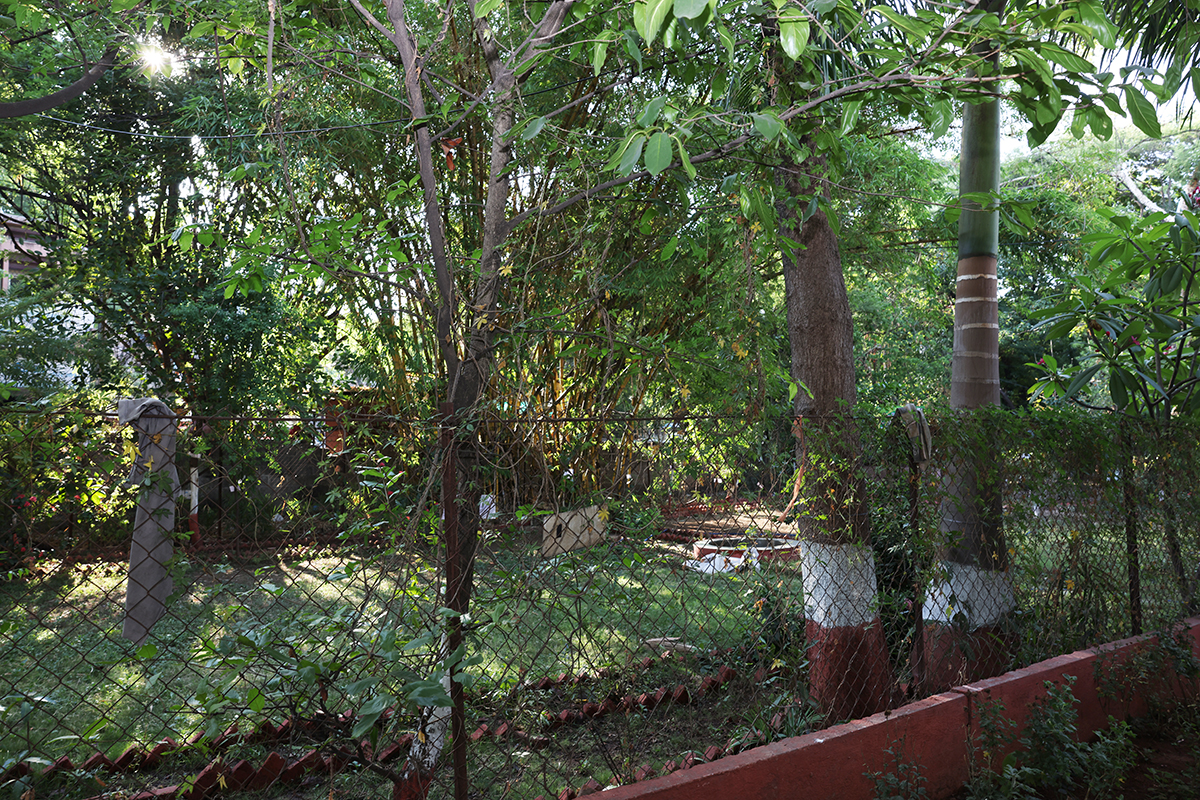
Herbal Garden (Dravyaguna Department)
Medicinal plant collection maintained across the College, Departmental Terrace, Tarachand Hospital premises, and Hostel, with an official published plant list used for Dravyaguna practical training.

Library
Maintains separately published UG and PG library journal lists, a UG manuscript list, geo-tagged library service photographs, and dedicated e-content resources — reflecting structured, NCISM/NAAC-compliant library documentation.
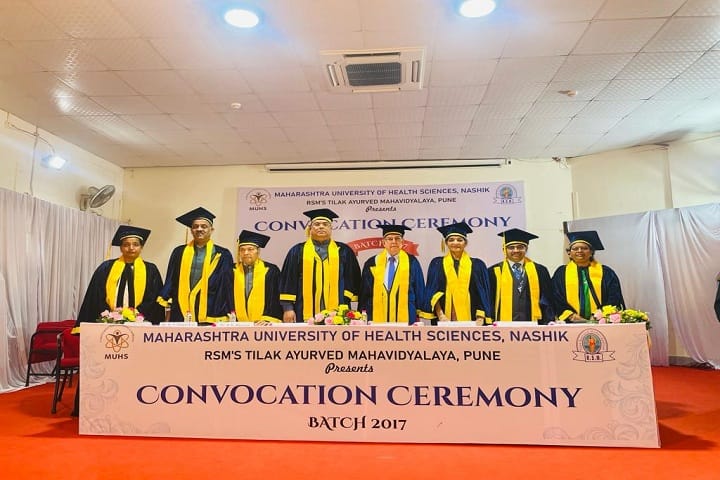
Auditorium & Seminar Hall
Dedicated infrastructure for academic seminars, conferences, and institutional events, documented on the official Infrastructure section of the college website.

Departmental Laboratories & Museums
Subject-wise laboratories and demonstration museums supporting practical training across all 14 NCISM-mandated BAMS/MD-MS departments, in keeping with NAAC and NCISM infrastructure norms.
Hostel & Accommodation
* Fees are subject to change. Please contact the administration for the latest details.
Campus Gallery
Campus

Campus
Campus

Campus
Campus
Campus
Herbal Garden
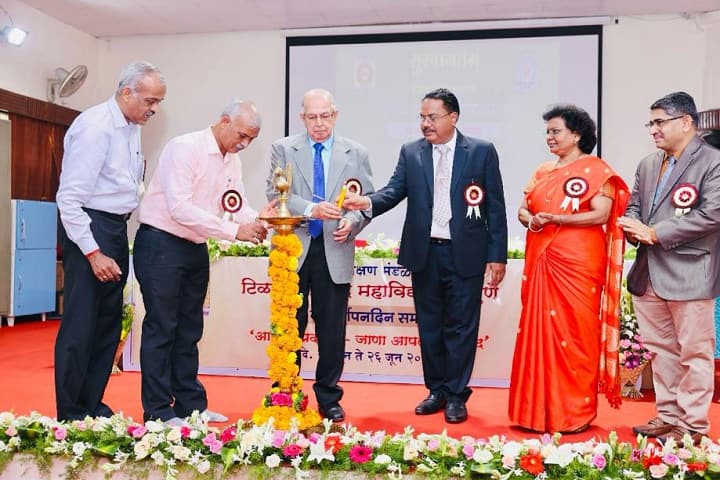
Events
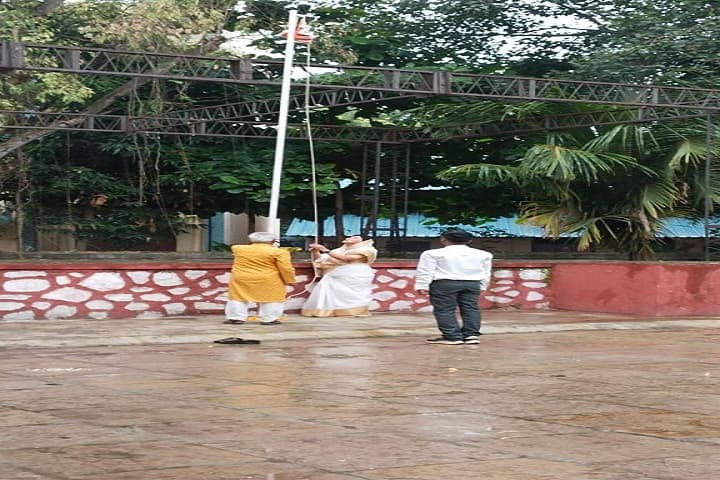
Events
Frequently Asked Questions
The institute was founded on 26th June 1933 by Rashtriya Shikshan Mandal as the first and oldest Ayurveda Mahavidyalaya in Pune. It was renamed 'Tilak Ayurveda Mahavidyalaya' in 1962 by then Maharashtra Chief Minister Shri Yashvantrao Chavan, honouring the legacy of Lokmanya Bal Gangadhar Tilak, whose newspaper 'Kesari' had argued for the revival of Ayurvedic medicine. The college now carries 92 years of institutional heritage.
Yes. The college holds NCISM College Code AYU0141 and is recognised by the National Commission for Indian System of Medicine, New Delhi. It is accredited (1st Cycle) by NAAC with a 'B+' Grade and a CGPA of 2.69 on a four-point scale. It is also a Maharashtra Government-aided institution affiliated with Maharashtra University of Health Sciences (MUHS), Nashik.
The college has an intake capacity of 125 students for the BAMS programme every year. The MD/MS programme has a combined intake of 57 seats across all 14 Ayurveda specialties, with Shalyatantra (7 seats) and Kayachikitsa (6 seats) having the largest allocations, as published on the official Intake Capacity page.
The Seth Tarachand Ramnath Charitable Ayurvedic Hospital (STRCAH), located at 592, Rasta Peth, Vd. Nanal Shastri Path, Pune. Established in 1926 — predating the college — it operates a 222-bed facility with a 24-OPD complex, the four-theatre Lokmanya Tilak Operation Theatre Complex, an NICU, a dialysis unit, and is NABH accredited. It was awarded 'Best Charitable Hospital' by the Charity Commissioner of Maharashtra in 2017.
Kayachikitsa (Internal Medicine) — daily OPD Mon-Sat; treats hemiplegia, paraplegia, Sandhigata Vata, Asthma, Hrudroga, fever with decoctions, lepa therapy, nebulisation, Panchakarma — ~75,000 procedures/year; Vamana, Virechana, Raktamokshana, Nasya, medicated Bastis; both IPD and OPD facility; charges <10% of routine rates, Shalya (Surgery) — Ksharasutra for fistula; Agnikarma for calcaneal spur/sciatica; Lokmanya Tilak OT Complex (4 theatres: specialised surgery, general surgery, ENT surgery, ophthalmic surgery); orthopaedics, urology, oncho-surgery; major surgery bill capped near Rs. 6,000, Shalakya (ENT) & Shalakya Netra (Ophthalmology) — Tonsillectomy, Adenoidectomy, Ear/Nose Surgery, IOL implant, Dacryocystectomy, Chalazion; free cataract surgery, Stree Rog Prasuti Tantra (Gynaecology & Obstetrics) — deliveries, caesarean, MTP, hysterectomy, family planning (tubectomy/vasectomy free); Garbhasamskara Kendra antenatal care; HIV counselling centre; dedicated female floor with 2 OTs + 1 labour room, Balrog (Paediatrics) — neonates and children up to 16 years; NICU (warmers, incubators, ventilators, phototherapy) set up by Rotary Club Kothrud; Suvarnabindu Prashan programme since 2011 (~250 babies/month on Pushya Nakshatra), Yoga & Swasthya Rakshan — daily therapeutic Yoga and Pranayama classes; Ayurvedic lifestyle consultation, Rognidan (Pathology) — routine pathology at affordable rates; Sonography, Radiology (X-Ray), Mammography, Dental — established with Rotary Club Ganeshkhind donation; routine checkups, RCT, cosmetic dentistry, dentures, Department of Medicine (Modern/Allopathic) — emergency and critical care monitoring; ECG, nebulisation, Department of Physiotherapy — trained staff, modern equipment, large senior-citizen patient base, Casualty — daily Mon-Sat after 1 PM, DOTS OPD — Mon/Wed/Fri, Manasrog (Psychiatry) OPD — Tue/Thu, Hrudroga (Cardiology) OPD — Friday, Twacharog (Dermatology) OPD — Saturday, Bronchial Asthma, Diabetes, and Rheumatology specialty OPDs, Dialysis Unit — 11 haemodialysis machines, Rs. 410/session (~15% of outside cost), Generic Medical Store (Bharatiya Jan Aushadhi Kendra)
222 Beds
Counselling Updates
View allLoading updates...
Tilak Ayurved Mahavidyalaya, Pune – Complete Admission & College Guide 2026
A Legacy of Excellence in Ayurvedic Education Since 1933
Robust Academic Framework and Regulatory Approvals
TAMV operates with absolute regulatory compliance, holding recognition from the National Commission for Indian System of Medicine (NCISM) with the College Code AYU0141. The institution is affiliated with the Maharashtra University of Health Sciences (MUHS), Nashik, ensuring that its BAMS, MD/MS, and Ph.D. programs hold complete statutory validity. Validating its commitment to quality education, the college has been accredited with a 'B+' Grade by the National Assessment and Accreditation Council (NAAC). Furthermore, the Ministry of AYUSH has recognized the attached hospital as a 'Model Institution', underscoring its national significance.
Seth Tarachand Ramnath Charitable Ayurvedic Hospital: A Clinical Powerhouse
The clinical training at TAMV is anchored by the 222-bed Seth Tarachand Ramnath Charitable Ayurvedic Hospital (STRCAH), established in 1926. This NABH-accredited facility operates an extensive 24-OPD complex and provides unparalleled clinical exposure. Students witness massive patient volumes, with hospital records showing nearly 50,000 outpatient visits and over 11,000 Panchakarma procedures performed annually, even during pandemic-affected periods. The hospital features a 4-theatre Lokmanya Tilak Operation Theatre Complex for specialized surgeries (including Ksharasutra therapy), an NICU established with Rotary Club support, an 11-machine dialysis unit, and a renowned Suvarnabindu Prashan program. Operating on a charitable mandate, it provides high-quality healthcare at a fraction of standard market rates, ensuring students train in a genuinely high-volume, community-focused environment.
Explore Related Resources


Upcoming Exams

IISER
IISER Aptitude Test • June 2026
NEST
NEST Entrance Exam • June 2026
CUET
CUET UG Exam • 11-31 May 2026
PGIMER
BSc Nursing Exam • July-August 2026